Listen to audio guide
≈ 2–3 min
Transcript
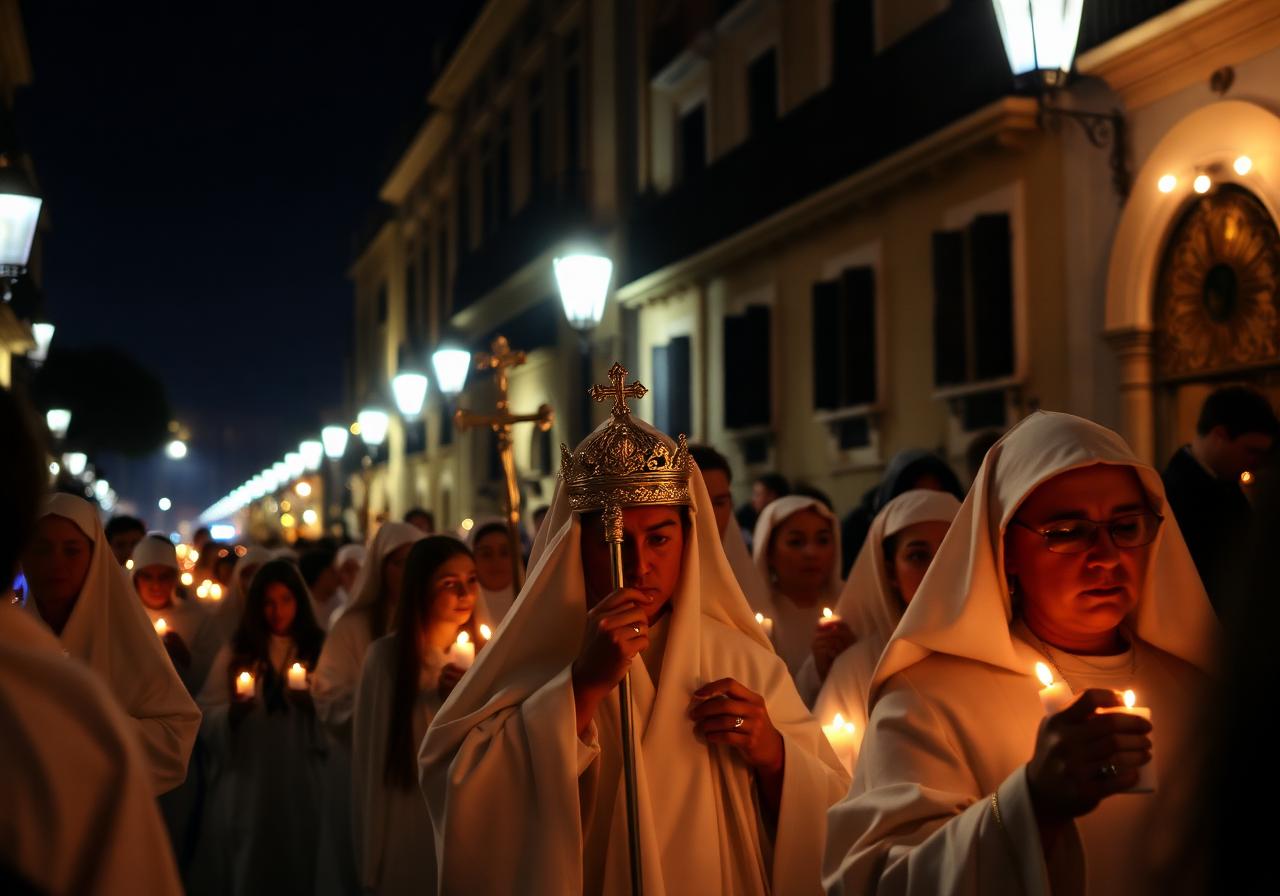
Holy Week in Sevilla is far more than a religious event: it is the greatest collective staging of the year. From Palm Sunday to Easter Sunday, about sixty brotherhoods, many over four hundred years old, leave their churches to make their penitence station at the Cathedral. Each cofradía brings out one or two pasos, huge floats of carved wood and silver bearing images of Christ or the Virgin. A paso can weigh over two thousand kilos and is carried by the costaleros, men hidden beneath it who walk to the rhythm called by the capataz. In front walk the nazarenos, in coloured robes and long pointed hoods — nothing sinister, only a 16th-century sign of anonymous penitence. As a paso passes certain corners, someone may sing a saeta from a balcony, a flamenco cry of grief that stops the street. The night of Holy Thursday into Good Friday morning — la Madrugá — with the Macarena, the Gran Poder, the Esperanza of Triana and el Silencio, is the most intense and crowded of all. Visitor tip: don't try to see everything. Choose two brotherhoods, check the official routes, arrive early and look for narrow corners where the paso almost brushes you. Dress with respect, don't cut through the lines of nazarenos, and if a Sevillan is with you, let yourself be guided: Holy Week must be felt, not explained.