Listen to audio guide
≈ 2–3 min
Transcript
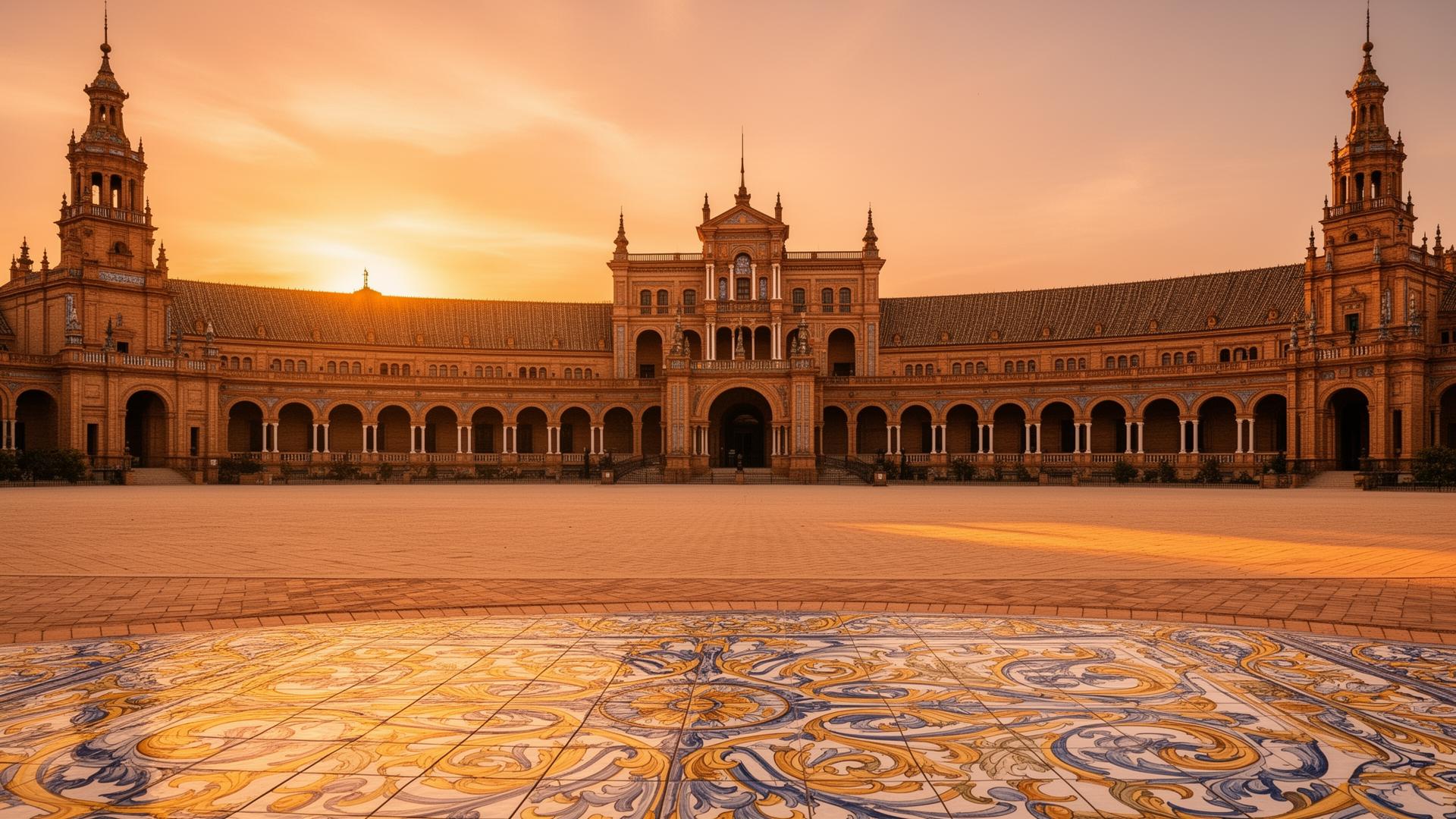
You are standing in Plaza de España, probably the most photographed square in all of Spain. It was designed by Sevillan architect Aníbal González between 1914 and 1928 as the flagship pavilion of the 1929 Ibero-American Exposition. For decades Sevilla had wanted to shake off its image of a faded city, and this square was its calling card to the world. It is a great half-moon, with two towers at each end facing María Luisa Park. The embracing shape is no accident: it represents Spain opening its arms to the former American territories. On the ground, forty-eight tiled benches represent every Spanish province of the time, each with its coat of arms, a map and a historical scene. Look for yours, or the one from a place you have visited, and sit down for a photo. A navigable canal runs through the centre, where you can rent a rowing boat for very little. Its four bridges symbolise the ancient kingdoms of Spain. Visitor tip: come at sunrise or late afternoon, when the brick glows golden and the crowds are thinner. For a magical view, cross to the far side of the canal and look back from the park. If you've seen Star Wars episode II or Lawrence of Arabia, you'll recognise this place instantly — famous scenes were filmed here. From here, a quiet walk leads you to the Mudéjar Pavilion, the Archaeological Museum and on to the Torre del Oro.