Listen to audio guide
≈ 2–3 min
Transcript
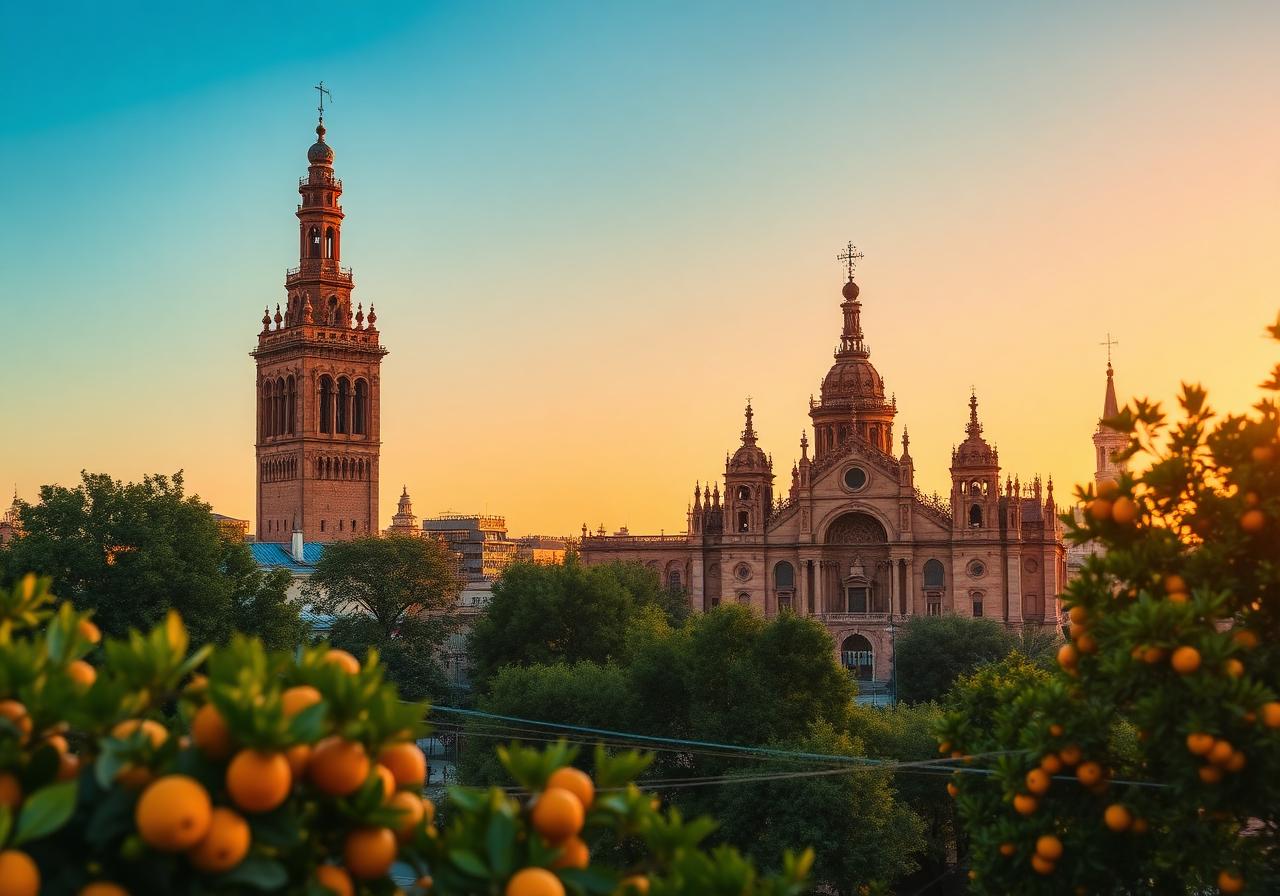
You are standing in front of the Giralda, the symbol of Sevilla. Look up: the lower two-thirds of the tower, in brick with sebka lozenges and blind arches, are 12th-century Almohad work — this was the minaret of the great mosque, once the tallest tower in Al-Andalus. When the city became Christian in 1248, King Ferdinand III chose not to demolish it and kept it as a bell tower. In the 16th century, architect Hernán Ruiz added the Renaissance belfry on top and crowned it with the Giraldillo, a bronze weather vane representing Faith — it turns with the wind and gives the tower its name. Behind it stretches the Cathedral, the largest Gothic cathedral in the world, built from 1401 on the site of the old mosque. The canons said: let us build a church so great that whoever sees it will think us mad. Inside rests Christopher Columbus, lifted by four kings representing the ancient kingdoms of Spain. Don't miss the Patio de los Naranjos either, the old ablutions courtyard of the mosque — one of the few places where you can still touch original Islamic Sevilla. Visitor tip: climb the Giralda first thing in the morning, when the interior ramps are quiet. They were built as ramps rather than stairs so the muezzin could ride up on horseback. From the top, all of Sevilla lies at your feet: the Alcázar, the rooftops of Santa Cruz and the Guadalquivir. Then step down into the Main Chapel and its altarpiece, the largest in Christendom, and leave through the Door of Forgiveness onto Calle Alemanes.